
Uncategorized
Cranial Cruciate Ligament (CCL) Disease in Dogs and Cats: Clinical Signs, Surgery and Recovery
Revised draft · Nov 9, 2026 · @Nichole Danova The short version If your dog or cat suddenly holds up a back leg, limps after play, or won’t put weight on a hind limb, a torn cranial cruciate ligament (CCL) is one of the most common reasons. The CCL is…
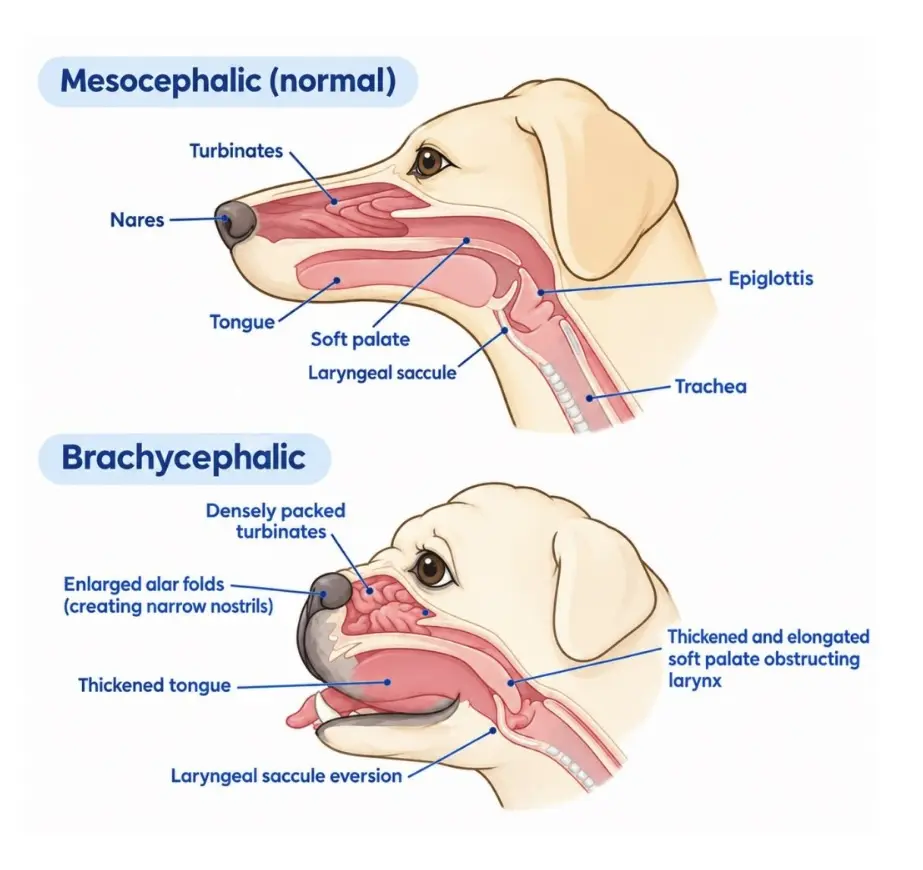
Brachycephalic Obstructive Airway Syndrome (BOAS) in Dogs and Cats
The short version Brachycephalic obstructive airway syndrome (BOAS) is a group of airway problems in flat-faced dogs and cats. Their skulls are short, but the soft tissues inside the nose and throat are not shortened to match, so air has trouble getting through. It is common in flat-faced breeds such…
Luxating Patella (Kneecap Dislocation) in Dogs and Cats: Clinical Signs, Grades and Surgery Options
The short version A luxating patella is a kneecap that slips out of its normal groove. It is one of the most common causes of rear leg lameness in dogs, especially small and toy breeds, and it can occur in cats. The right plan depends on how often the kneecap…
Canine Hip Dysplasia: Clinical Signs, Treatment and Surgery Options
The short version Hip dysplasia is a developmental condition in which the hip joint is loose from early in life. Over months to years, that looseness wears the joint and leads to arthritis. The right plan depends mostly on your dog’s age, size, and how much arthritis is already present.…
Perineal Urethrostomy in Cats
Nov 12, 2026 · @Nichole Danova The short version A perineal urethrostomy (PU) is a surgical procedure that creates a new, wider opening for urine to leave the body. It is most often performed in male cats that keep blocking, and it helps manage the problem rather than curing the…
Chronic Ear Infections and Surgical Ear Disease in Dogs and Cats: Ear Canal Surgery and Recovery
The short version Chronic ear infections (otitis) are common and often frustrating in dogs, and less common in cats. When an ear has been diseased for a long time, or the changes in the canal can no longer be reversed, surgery may be the only way to make the ear…
Canine Hip Dysplasia: Clinical Signs, Treatment and Surgery Options
The short version Hip dysplasia is a developmental condition in which the hip joint is loose from early in life. Over months to years, that looseness wears the joint and leads to arthritis. The right plan depends mostly on your dog’s age, size, and how much arthritis is already present.…
Chronic Ear Infections and Surgical Ear Disease in Dogs and Cats: Ear Canal Surgery and Recovery
The short version Chronic ear infections (otitis) are common and often frustrating in dogs, and less common in cats. When an ear has been diseased for a long time, or the changes in the canal can no longer be reversed, surgery may be the only way to make the ear…
Cranial Cruciate Ligament (CCL) Disease in Dogs and Cats: Clinical Signs, Surgery and Recovery
Revised draft · Nov 9, 2026 · @Nichole Danova The short version If your dog or cat suddenly holds up a back leg, limps after play, or won’t put weight on a hind limb, a torn cranial cruciate ligament (CCL) is one of the most common reasons. The CCL is…
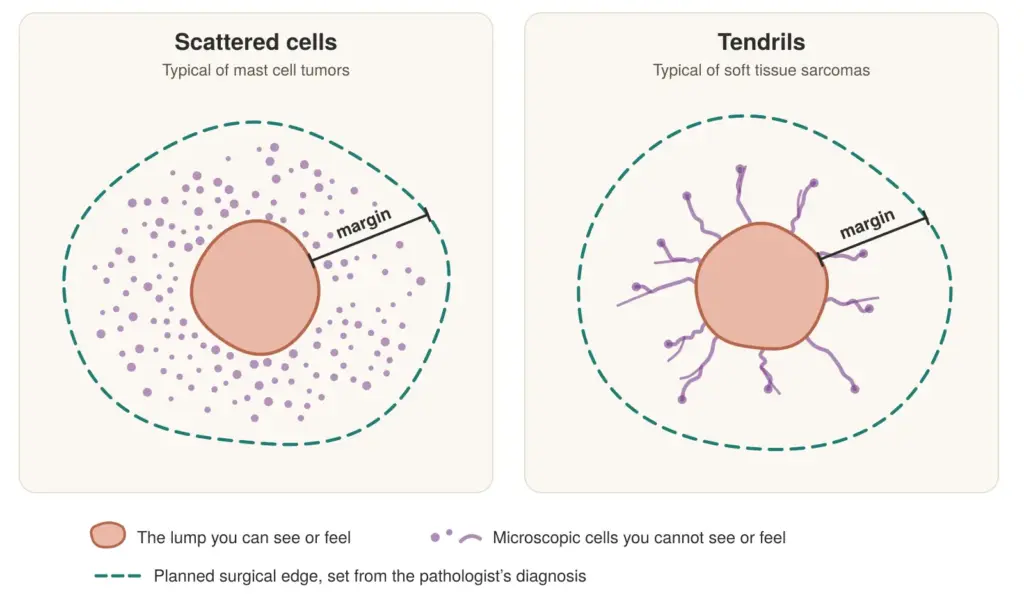
Lumps and Masses in Dogs and Cats: Testing and Surgical Removal
The short version A new lump on your dog or cat is a mass until a test shows what it is. You cannot tell what a lump is by feeling it, and even experienced veterinarians cannot. A simple sample, taken at the first visit, usually answers the most important question:…